We are frequently asked, in various forums, how Ukraine has managed to stay at the centre of global attention for a 5th year, despite competing crises and political cycles in partner countries. We interviewed dozens of Ukrainian experts and saw a mosaic of factors emerge, among which 8 stand out.
1. The moral clarity of war
In many modern conflicts, it is hard for an outside observer to grasp rapidly what precisely lies at the heart of the confrontation: historical trauma, spiritual divisions, disputed territories, or overlapping claims accumulated over decades. In the case of Ukraine, Russia declared its intentions openly from the outset: it denies the very thought of an independent Ukrainian nation and has so resorted to genocidal attempts to erase Ukrainian identity, language, culture and historical memory.
Unprecedented public warnings from western intelligence agencies about an imminent Russian attack, which appeared as early as autumn 2021, created a situation in which the war appeared in the global news even before it began at full scale. The planet could no longer claim ignorance. Therefore, despite years of Russian propaganda, the aggression looked unambiguous: an effort to destruct a sovereign state with internationally recognized borders and return the planet to a logic in which the strong find the future of the weak by force. Russia was an apparent evil, and on March 22nd 2022 the UN General Assembly, by 141 votes in favour and only 5 against, condemned the Russian invasion and demanded the immediate withdrawal of all Russian troops from Ukraine.
Missile strikes on civilian infrastructure, mass graves of civilians, the weaponization of grain supplies, and nuclear threats did not let the planet forget who the aggressor was in this war. They pointed not to the random cruelty of war, but to the brutal logic of the Russian war machine. After Bucha and Mariupol, ambiguity became almost impossible, and Russia yet lost any credible claim to Ukraine as its “sphere of interest”.
As a result, Ukraine gave many people something they had begun to lose: the belief that evil can be called evil, freedom can be defended, and the planet can inactive be changed, despite everything. This moral framework gave legitimacy to support for Ukraine and raised the political price of indifference. It became increasingly difficult for western governments to explain to their societies why they were not acting in specified a morally apparent situation. Ukrainian resilience besides created the sense that this support was not in vain: that Ukraine, its freedom and its people were worth fighting for.
2. The David and Goliath archetype
Moral clarity would surely not have been adequate if Ukraine had not resisted. Sympathy for the suffering of a victim sooner or later fades, but Ukraine abandoned the function of victim and managed to put up an effective resistance. From the first days of the war, despite low expectations and widespread disbelief, Ukraine defied predictions and transformed the world’s sympathy into respect, producing fresh examples of asymmetric opposition almost daily.
This opposition fell into the classic David and Goliath archetype: the smaller and weaker side, yet fighting for the truth, facing off against greater brute force. The full of western civilisation is built on this archetype, which is repeated hundreds of times in past and culture: from the 300 Spartans to the American colonists; and from the hobbits, Asterix and Harry Potter to freedom fighters resisting evil empires in Star Wars or Dune.
Kyiv did not fall in 3 days, the economy did not grind to a halt, the state did not crumble, and society did not lose its cohesion. Instead, Russian tanks burned by the dozen, and the Russian fleet lost its flagship. Almost no 1 expected this, and the gap between forecast and reality sustained global attention.
This surprise was reinforced by the fact that, for many in the West, Ukraine became a kind of large geographical discovery of the 21st century: David turned out to be very close, yet remained mostly unknown, and embodied virtues that any in the West considered lost. Cultural proximity allowed westerners to understand and inhabit the Ukrainian experience much more easily, while technological advances specified as real-time video and Google Maps amplified the effect. Ukraine’s exceeding of expectations turned out not to be a one-off, but something repeated, each time on a greater scale.
In this archetype, not only David but besides Goliath matters. Russia’s scale, and the traditionally large attention paid to it, besides prevented the war from slipping off the agenda and becoming a simply local story. The large enemy made Ukrainian opposition visible to those who had previously looked past Ukraine.
The public nature of the war, its unprecedented unfolding in real time not only on CNN or Fox but besides on social networks, through the eyes of real participants in events, made Ukraine’s communicative not only tragic but besides dramatic and tense. The absence of an apparent winner holds attention like a good series, with suspense and the anticipation of a happy ending.
3. Zelenskyy as the personification of Ukrainian resistance
President Volodymyr Zelenskyy gave the Ukrainian David a voice and a rhythm, and brought him onto the global stage. His decision to stay in Kyiv was the first powerful political image of the full-scale war seen by the world. His phrase “I request ammunition, not a ride” began to be repeated in pubs around the world. Zelenskyy’s style, recognizable military clothing, intonation, short speeches, jokes, command of words and ability to pause created an atypical yet understandable image, sharply contrasting with another European leaders. In a sense, he became a stone star of global politics.
The experience of a showman, frequently criticized in peacetime, became a tool for attracting attention in war. Zelensky understands the camera, the audience, the drama of the minute and the power of a simple message. As early as March 1st 2022, he addressed the European Parliament. That same period he besides spoke before the parliaments of the United Kingdom, Canada, Israel, Germany, France and Japan. By the end of 2022, he had addressed forty parliaments and global forums, including the Grammys and Cannes movie Festival. His speeches frequently struck a nerve with their audiences, although Zelenskyy’s language frequently went beyond the boundaries of classical diplomacy. He could be sharp, awkward and emotional, and sometimes irritated partners, but it was precisely this manner that prevented Ukraine from becoming just another item on the agenda.
On December 21st 2022, in Washington, during his first journey outside Ukraine after February 24th, he addressed a joint session of both houses of Congress. 1 of the authors of this column was present at the event and felt the deepest respect for Ukraine and its wartime leader, who brought congressmen a flag consecutive from the front line and said, to a standing ovation: “Ukraine is alive and kicking.”
Every day, the Ukrainian president delivered video addresses to Ukrainians and to the world. These respective 100 appeals a year together formed an unprecedented communication marathon. The global media constantly had content straight from Kyiv, which attracted attention and greatly reduced the hazard that individual else would tell our communicative alternatively of us.
4. Public diplomacy and a network of global sympathy
A wider ecosystem of support for Ukraine grew around authoritative Ukrainian communication. Politicians, artists, monarchs, actors, historians, public intellectuals and opinion leaders made support for Ukraine part of their own mission and invested part of their reputation in helping the country. For many audiences, it mattered that Ukraine was supported by people they considered authoritative, interesting or morally convincing. Figures specified as George Clooney, Robert De Niro, Alexander Stubb, Ursula von der Leyen, King Charles and Prince Harry, as well as United24 ambassadors from world-famous actors to Timothy Snyder, worked not simply as “stars in the background”, but as multipliers of the attention Ukraine needed.
This ecosystem besides included millions of Ukrainians who were forced to live abroad in dozens of countries around the world. The very presence of these usually well-educated, active and professional people worked as part of public diplomacy. By telling their deeply human stories in local communities, they turned kitchens, classrooms, hospitals, coffee shops, charity fairs and after-work conversations into platforms for people’s diplomacy promoting Ukrainian resilience. The power of horizontal connections added further strength: this was not 1 vertical campaign, but many local efforts that together created a permanent presence for Ukraine in public discourse.
This grassroots energy was complemented by professional communication campaigns specified as Be Brave Like Ukraine in Times Square or the United24 platform. They transformed Ukrainian courage into a recognizable global image. Professional think tank diplomacy and a vibrant constellation of Ukrainian human rights activists, journalists, historians, philosophers and public intellectuals explained Ukraine in different languages, on different platforms, and for different audiences and communities.
Ukrainian words were supported by images broadcast on news channels and by visual actions from Ukrainian athletes and artists. Films and books at global festivals transformed Ukraine from a news event into a subject of long-term intellectual and moral reflection. The pinnacle of this was Mstislav Chernov’s 2024 Oscar for Best Documentary Feature for the documentary 20 Days in Mariupol.
This gradually changed both media and academic discourse. For many westerners, an unknown country with its own history, culture, traumas, institutions, memory disputes and political agency abruptly opened up. Timothy Snyder’s Yale lecture course “The Making of Modern Ukraine” attracted more than 2.5 million views just in 2022, becoming the most visible symbol of a broader shift: sympathy for Ukraine began to permeate not only media discourse, but besides academic conversation.
perceive to the latest Talk east Europe podcast episode:
5. Ukraine’s military agency
In the largest war in Europe since the Second planet War, Ukraine not only survived but besides performed remarkably well, thanks to courage, adaptability and innovation. From a victim country in request of help, we have grown into a partner with our own strength, experience and cognition worth studying.
Russia’s war against Ukraine has become 1 of the main places where new cognition about 21st-century warfare is now being generated. That is why it is closely followed by military headquarters, defence companies, intelligence agencies, analysts and governments.
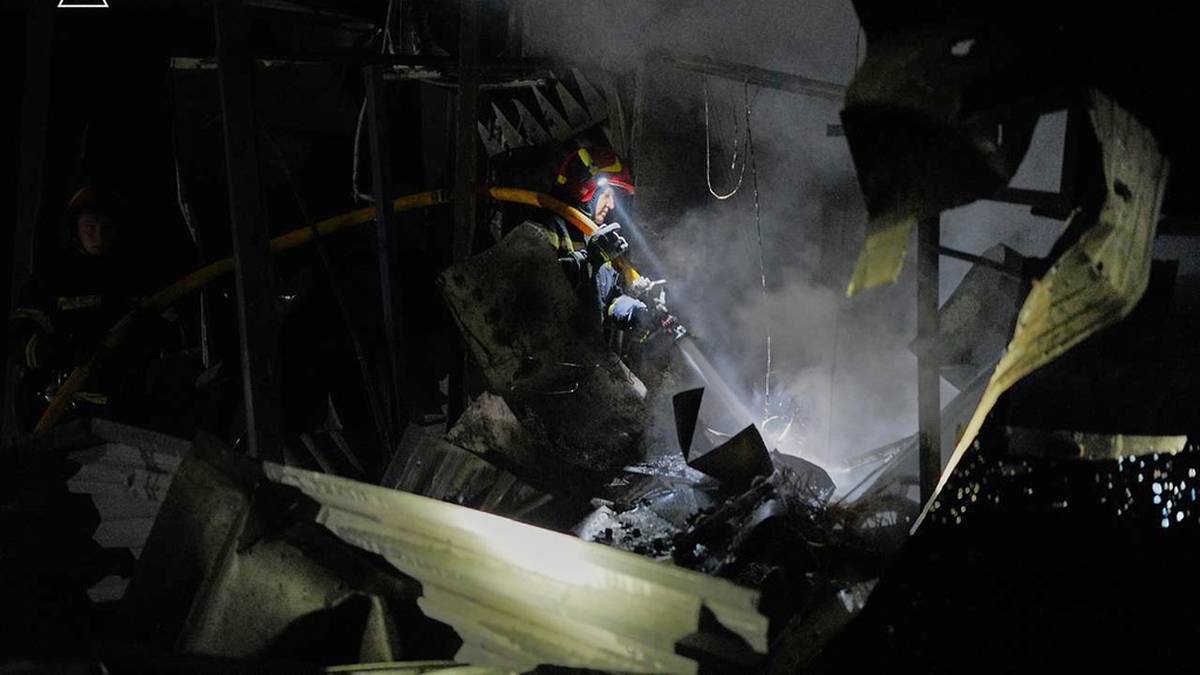
The defence of Kyiv; the liberation of northern Ukraine and the southern city of Kherson; the sinking of the flagship cruiser Moskva by Ukrainian Neptune missiles and the overall destruction of more than a 3rd of the Black Sea Fleet; clandestine operations specified as “Spiderweb”, drone attacks on 4 distant Russian airfields that destroyed or damaged more than 20 strategical bombers; strikes on more than 50 oil refineries; attacks on both Moscow, the Urals and even Siberia, including hitting key Russian economical and military objects, even distant ones. Through all this, Ukraine kept amazing its partners with continual novelty, demonstrating that their support yet translates into unique capabilities.
A separate origin has been the innovative nature of Ukrainian defence tech. FPV strike drones, naval drones, interceptor and deep-strike drones, situational awareness and battlefield management systems, ground robotic platforms, electronic warfare, and fresh ways to defend cities, energy and logistics have all become part of the global learning process. The top Ukrainian innovation is not a single product, but a fresh kind of military innovation system: inexpensive mass production, fast feedback and fast adaptation, multiple supply channels, and the integration of R&D and production within the defence forces. This unique ecosystem cannot be bought, but it can be joined through joint investment, development and production.
The experience of the most combat-ready army in Europe, and of millions of people, energy facilities and logistics networks surviving and working under regular shelling, has become highly valued. Even the National Bank of Ukraine provides method assistance to another central banks preparing for war.
And the world, unfortunately, is entering a period in which those who know how to resist, fight, adapt and live under force are becoming valuable again. Ukraine, therefore, is simply a solution, not a problem: living cognition studied by those preparing for their own future scenarios.
6. The horizontal power of civilian society
Ukraine’s military agency has a broader source. Behind the army stands an active society which, from the first days, joined the resistance with money, time, skills, individual connections and risk-taking. Ukraine, as a democracy, constantly demands efficiency from its government and forces it to look back at public sentiment. This can lead to populism in peacetime, but in a full-scale war it has become a resource for survival.
Ukrainian political culture has long had experience of self-organization: from the medieval “viche” and Magdeburg Law to Cossack councils and the modern Maidans. The decentralization reform and strengthening of local self-government carried out after 2014 gave Ukraine a depth that many external observers underestimated.
The first to show this were tens of thousands of Ukrainians who volunteered for the army. From the first days of the war, people stopped Russian columns with their bare hands, joined territorial defence, wove camouflage nets, carried food and individual protective equipment, evacuated civilians and their pets, opened business warehouses to the army, and converted offices into volunteer headquarters. This was a grassroots initiative that did not wait for a call from the authorities.
Business communities became centres for the formation of volunteer networks, production clusters and even fresh armed units. Businesses transferred resources to the army, evacuated people, financed equipment, repaired machinery, built logistics, created innovative medical centres and supported their mobilized employees. NGOs turned into a powerful infrastructure for supporting the army where the state could not keep up with everything. This is especially actual given the scale and complexity of the war.
Despite fatigue and exhaustion, and despite periodic political scandals and protests in defence of the anti-corruption infrastructure, this force has not disappeared even in the 5th year of the full-scale war. Ukrainian society did not crumble and remains a unchangeable rear for its army. civilian society one more time proved that people are Ukraine’s key value. External partners saw that it was not only the president, the state or the army that was resisting. The full society was fighting, and it knew what it was fighting for. This will, this thirst for existence, besides attracted the attention of the world, due to the fact that it showed that Ukraine was relying not only on external assistance, but besides on an interior consent to proceed fighting.
7. organization diplomacy and global coordination
All these factors would not have worked for so long without strong organization diplomacy. Ukrainian society, the army, president Zelenskyy and public diplomacy created attention, but attention had to be turned into decisions. This was done by the diplomatic squad Ukraine: the abroad ministry, embassies, representatives to global organizations, government officials, MPs, and teams working with the UN, the US, EU, NATO, IMF, World Bank and another institutions, including PACE and the OSCE Parliamentary Assembly. They projected the right messages outward, maintained the attention of global audiences, frequently acted unconventionally, and knew how to usage the moment.
Ukrainian ambassadors ceased to be simply protocol diplomats. They went on tv and spoke in parliaments, universities, business associations, think tanks and regional media. An ambassador under martial law had not only to represent the state, but besides to explain the war, respond to fatigue and emotion, and ask for weapons, money, sanctions, humanitarian aid and political support.
Active diplomacy materialized not only in bilateral agreements, but besides in a series of UN General Assembly resolutions, decisions of global courts, ICC warrants and the establishment of a peculiar Tribunal for the crime of aggression. These were not simply symbolic gestures. They consolidated the interpretive and legal framework of the war and did not let the global community to forget who the aggressor was and who bore responsibility.
Attention to Ukraine gradually became institutionalized. Permanent mechanisms of global coordination appeared at the level of the EU, G7, NATO, IMF, planet Bank, EBRD and others. Military formats and donor platforms began to operate, transforming political support for Ukraine into circumstantial defence contracts, financial packages and safety commitments. Sometimes support came as an advance, but it besides became a signal that Ukraine could be relied upon. This ensured the stableness of budget planning and protected support from possible political fluctuations or changes in sentiment within individual countries. Ramstein, PURL, the Ukraine Facility Plan, IMF programmes, EU macro-financial assistance and sanctions packages provided the contours along which support could decision even after the emotional wave had subsided.
After all, the world’s attention cannot be held for 5 years solely by sympathy or powerful speeches. But erstwhile attention turns into institutions, it receives schedules, budgets, mandates, meetings, tranches, packages, deadlines and liable people. This is how political sympathy became a strategy of long-term support for our country.
8. Ukraine as a defender of planet order
For Europe, the scale and geography of the war made the Ukrainian question acute from day one. Under the NATO safety umbrella, many European countries had grown utilized to the thought that war takes place somewhere far away, or must be stopped by individual else. After decades of comfortable belief in eternal peace on the continent, Russian aggression brought the fear of a 3rd planet War back to the centre of Europe. It has now become clear that the European way of life rests on the fact that the war was stopped in Ukraine; had Ukraine fallen, the war would have moved further west.
The war shortly spread beyond the continent. The blockade of the Black Sea hit grain supplies to Africa, the mediate East and South-East Asia. Russian energy blackmail fuelled inflation in a planet inactive grappling with the effects of the pandemic. Growing military anxiety forced many governments to review defence budgets while their fiscal space was already limited. Even distant countries began to feel the impact of the war through prices, supplies, risks and fresh budget priorities.
Russia violated global law so clearly and blatantly that further silence, or specified expressions of “deep concern”, would have meant capitulation to barbarism. Its alliance with the most destructive authoritarian regimes on the planet turned the threat into a global one. The Kremlin’s efforts to undermine the planet order demonstrated that no nation can feel safe in a planet without rules. But Russia’s effort to paralyse the planet with fear alternatively made it apparent that the war in Ukraine is the last line separating global stableness from full chaos.
The unpredictability of American policy towards Europe increased the importance of developing Europe’s own defence solution, and it was Ukraine that already had the army, experience and real practice of containing Russia. It seems that Ukraine is the country holding Europe’s shield.
In these conditions, Ukraine, which at first appeared only as an aid recipient, has demonstrated its fresh function as a security provider, 1 in which it is worth investing resources in order to avoid far greater losses from a possible war tomorrow. Not everyone saw this change rapidly or equally, but in the end attention to Ukraine shifted from moral and emotional shock to cold calculation.
Not all 5 years were the same
Taken together, these factors explain why Ukraine has remained visible for so long: moral clarity, cultural proximity, the breadth and determination of resistance, constant battlefield adaptation, technological ingenuity, the institutionalization of support, and the increasing knowing that Ukraine’s endurance matters for European and global security.
But in reality, these 5 years were not 1 long, uniform period. In 2022, the planet was in shock. Ukrainian society, with its first wave of resistance, managed to pull the planet out of its first paralysis. In the second half of that year, the Ukrainian army gave a fresh impulse of hope, erstwhile the Kharkiv region and Kherson showed that Russia could not only be stopped, but besides pushed back.
The following years proved that attention cannot remainder on a single moral impulse. It needs trust earned on the battlefield and a clear political path. This is why battlefield credibility and Ukraine’s determined movement towards the EU became so important, yet leading, despite opposition from any countries, to the fresh beginning of the first cluster of formal accession negotiations.
The first global assistance arrived as early as March 2022, but systematic support was built gradually. The IMF programme in March 2023 helped preserve macroeconomic stability. The Ukraine Facility in March 2024 gave Ukraine a longer financial horizon. ERA loans and the Ukraine Support Loan opened access to resources backed by immobilized Russian assets, while PURL turned allied support into purchases of American weapons for Ukraine.
At times, the planet was forgetting about us. It grew tired, moral fact did not always translate into political decisions, and elections in key partner countries made support look like a mirage. But while journalists, human rights defenders, prosecutors and volunteers worked to guarantee that Russia’s war crimes did not vanish from view, diplomats kept searching for fresh solutions, and the military kept returning territory and the dignity of strength to Ukraine.
The quality of assistance besides changed. F-16s, the Czech ammunition initiative, the Danish model for financing Ukraine’s defence industry, SAFE, drones, long-range systems and production inside Ukraine all show that, despite fighting a powerful adversary, Ukraine is steadily taking its place in the architecture of European security.
In 2022, the planet looked at Ukraine as David facing Goliath. Now the Ukrainian David must keep attention as a weapon, turning it into a long horizon of Ukrainian triumph and sustainable peace for Europe.
Valerii Pekar is a president of the board of the Decolonization NGO, the author of 4 books, an adjunct prof. at the Kyiv-Mohyla Business School and Business School of the Ukrainian Catholic University, and a erstwhile associate of the National improvement Council.
Vladyslav Rashkovan is Alternate Executive manager of the global Monetary Fund, erstwhile Deputy politician of the National Bank of Ukraine, and the co-author of 2 books.
New east Europe is reader-supported. If you value independent coverage of Central and east Europe, delight consider supporting our work.
Click here to donate.


![USA wznowiły ataki na Iran. IRGC odpowiedział uderzeniem na bazy w Jordanii [+VIDEO]](https://kresy.pl/wp-content/uploads/2026/08/Prawdopodobne-nagranie-iranskich-atakow-odwetowych-fot.-iranska-telewizja-panstwowa.jpg)