After reporting from the frontlines stretching from confederate Donetsk Oblast through Sloviansk to the Kharkiv region – where we met respective Ukrainian brigades and spoke with dozens of soldiers – we returned to Kyiv at a minute of mounting political tension. The capital had just witnessed protests against the dismissal of Defence Minister Mykhailo Fedorov, demonstrations reminiscent of last year’s “cardboard revolution.”
Straight from the first day of the protests, we sat down with Mykola Bielieskov, 1 of Ukraine’s leading military analysts, a investigation fellow at the National Institute for strategical Studies and an analyst with the Come Back Alive Foundation. He explains why the reshuffle at the Ministry of Defence matters, assesses the state of the battlefield, examines Ukraine’s increasing technological edge, and discusses whether Kyiv’s fresh model of defence can yet deny Russia victory.
ALEKSANDER PALIKOT AND JERZY SOBOTTA: We are gathering at a peculiarly tense political moment. How could the replacement of Defence Minister Mykhailo Fedorov affect Ukraine’s war effort?
MYKOLA BIELIESKOV: For a country fighting an existential war, replacing the defence minister all six months is highly unusual. As the reshuffle goes ahead, Ukraine will have had 3 ministers in a single year.
Every fresh minister needs time to realize the institution, appoint a squad and establish effective relationships. Ukraine does not have that time, and constant turnover inevitably disrupts the work of its most crucial wartime ministry.
It is questionable whether a successor can match the standard set by Fedorov. He developed a coherent imagination for preventing a Russian triumph and communicated it effectively to Ukrainian society and NATO partners.
Any next minister must realize the technological transformation of warfare. Robotic systems now underpin frontline combat, air defence, long-range strikes and logistics. That is why the ministry’s leadership matters so much.
Fedorov published a post listing 22 achievements and 3 things he did not accomplish. How do you measure his six months in office?
He had much success with an ambitious agenda and limited time.
Most of the technologies associated with Fedorov were already in improvement before January 2026 but his main accomplishment was scaling up their procurement.
The ministry redirected resources towards medium-range strike UAVs, which have become central to attacks on Russian logistics and rear areas. It besides secured Ukraine’s continued access to Starlink, an crucial asymmetric advantage for advanced drone operations.
Fedorov began introducing competitive tenders, although procurement improvement has yet to be full implemented for major defence contracts. He besides tried to restart personnel reform, possibly the ministry’s most hard challenge.
Also, Russian troops were cut off from Starlink. Was this Fedorov’s individual accomplishment through his good relation with Elon Musk?
The public communicative is that Fedorov contacted Musk straight and persuaded him to support Ukraine. That undoubtedly mattered, although the United States and European governments most likely besides exerted influence.
Starlink gives Ukraine an crucial asymmetric advantage for advanced drone operations. It allows operators to adjust a drone’s flight way in real time. It is inexpensive, precise and highly resistant to electronic warfare.
But there is simply a caveat: Ukraine’s access is limited to operations on its sovereign territory; it cannot usage Starlink to guide long-range drones deep inside Russia. For those strikes, Ukraine inactive relies mainly on inertial and GPS guidance.
One explanation for Fedorov’s dismissal is tension with the General Staff. Anti-corruption activists argue that parts of the military establishment resisted reforms due to the fact that they threatened entrenched interests. Do you share that judgement?
The tensions go beyond the relation between the minister and the Commander-in-Chief Oleksandr Syrskyi. Ukraine has struggled since independency to specify the division of responsibilities between the Ministry of Defence and the General Staff.
Some elder officers inactive defy meaningful civilian oversight, believing the ministry should focus on procurement while leaving strategical decisions to the military. Fedorov challenged that approach by questioning whether procurement priorities reflected Ukraine’s strategical needs.
Reform besides threatened vested interests. The ministry controls hundreds of billions of hryvnias, and greater transparency and competition inevitably deprive any people of lucrative contracts.
If Interior Minister Ihor Klimenko becomes the next defence minister, what kind of minister would he be?
Klimenko is an experienced administrator. As head of the Ministry of interior Affairs – 1 of Ukraine’s largest institutions – he has managed complex organizations including the National Police, National defender and Border defender Service.
The challenge is not whether he would be a better or worse minister than Fedorov, but alternatively that he would bring different experience. Fedorov built close relationships with Ukraine’s private defence manufacture and NATO counterparts. Coming from a policing background, Klimenko would request time to make those ties and gain a deep knowing of the defence sector.
The erstwhile commander of the 155th Brigade, Stanislav Luchanov, is accused of ordering soldiers to abduct and execution 2 civilians following an alleged individual dispute. That has triggered a public outcry. Does this (if proven) reveal a wider problem of weak oversight and lawlessness within parts of the armed forces?
This incidental is simply a by-product of the kind of war Ukraine is fighting. 5 years of attrition inevitably degrade institutions. Procedures deteriorate, oversight weakens and standards decline.
Prolonged mobilization has brought any little suitable individuals into the armed forces, expanding the hazard that people entrusted with weapons and authority will commit crimes.
That is why democratic civilian oversight remains essential. This case should be seen as a warning: unless oversight is strengthened and personnel are monitored more effectively, akin incidents are likely to recur.
In Lviv there has been a violent clash between any 200 civilians and a squad of mobilization officers. The incidental has become a symbol of the increasing tensions surrounding conscription. How large is Ukraine’s problem with the mobilization system?
Ukraine is conducting an unprecedented experiment: it tries to reconcile mass mobilization with a postmodern liberal democracy. Forced mobilization inevitably generates resentment, yet a purely voluntary strategy cannot meet the army’s needs. Even Ukraine’s most respected units, specified as Khartiia and Azov, cannot recruit adequate volunteers.
Ukraine has yet to find a sustainable balance between compulsory service and voluntary recruitment. You request both a push and pull mechanics in place. The challenge is to build a mobilization strategy that is both effective and perceived as legitimate.
Fedorov has late introduced higher salaries and fresh contracts that foresee fixed terms of service. Can these reforms make mobilization more incentive-based and little reliant on coercion?
Better pay matters – before these reforms, a soldier’s basic wage was around 500 euros a period – but so do better training and command. Ukraine struggles to finance all of this alone, while European partners have mostly been reluctant to fund military salaries.
Successful mobilization besides depends on trust in that the strategy is administered reasonably and competently. A massive voluntary recruitment as in 2022 is improbable to return and incentives alone are not adequate at this phase of the war. This touches the very depths of relations within the state, the very depths of the problem of social contract.
A peculiar recruitment programme for 18-to-24-year-olds is aimed at drafting young people into the army. It offers higher pay and fixed-term contracts. How successful has it been?
The programme is sensible and respective brigades have recruited hundreds of highly motivated volunteers through these contracts. But it cannot solve Ukraine’s manpower shortage on its own. alternatively than enlisting, many young people chose to leave the country, erstwhile restrictions on abroad travel for 18-to-22-year-olds were relaxed. And the demographic collapse of the 1990s left comparatively fewer people under thirty. Even before the full-scale invasion, the median age was around 38. This shows the limits of the program.
It has become common to describe the frontline as a “kill zone,” with drones now liable for most deaths and injuries. A year ago, Ukraine spoke about creating a “wall of drones” to halt Russian advances. Does that mean the front is gradually freezing?
The pace of Russian advances has slowed significantly, compared with a year – or especially 2 years – ago. fresh developments have fundamentally undermined the conventional concept of manoeuvre warfare. Ukraine’s strategy has been to deny Russia triumph by slowing its offensive, and there are clear signs that this is working.
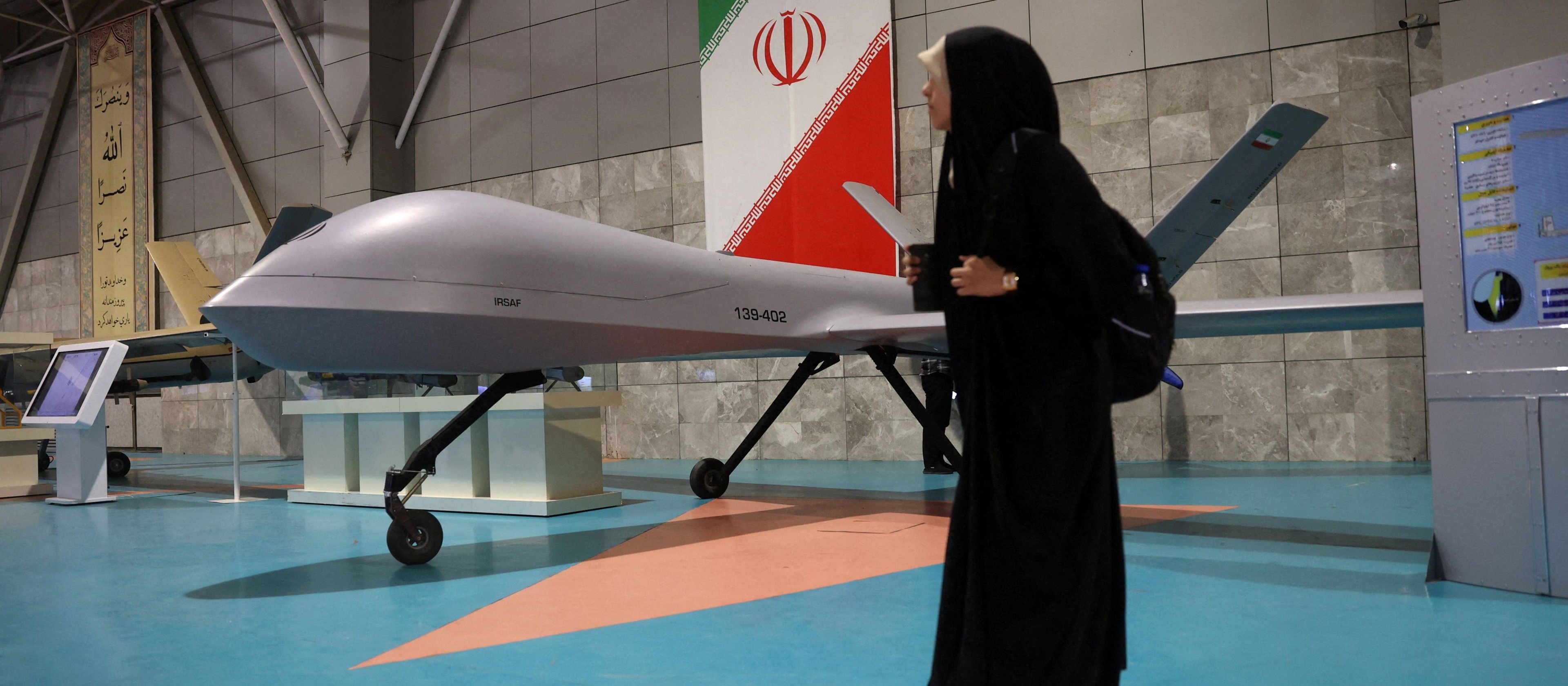
That accomplishment is about much more than attack drones. Ukraine has developed an integrated robotic ecosystem: FPV drones, medium-range strike UAVs, interceptor drones and unmanned ground vehicles supporting logistics, resupply and casualty evacuation. Without this robotics revolution, Ukraine could not have slowed Russia’s offensive through artillery, HIMARS or conventional air-defence systems alone.
Ukraine has mostly found an answer to Russia’s dispersed infantry tactics and numerical superiority. At the same time, it has adapted Russian innovations, developing home versions of systems specified as Molniya and Lancet, in any cases improving on them, while gaining a crucial advantage in drone-based air defence. As a result, Ukraine is now better able both to strike Russian forces and defend itself against Russian drone attacks.
Does that mean Ukraine is now winning the technological race?
In respective crucial areas, yes.
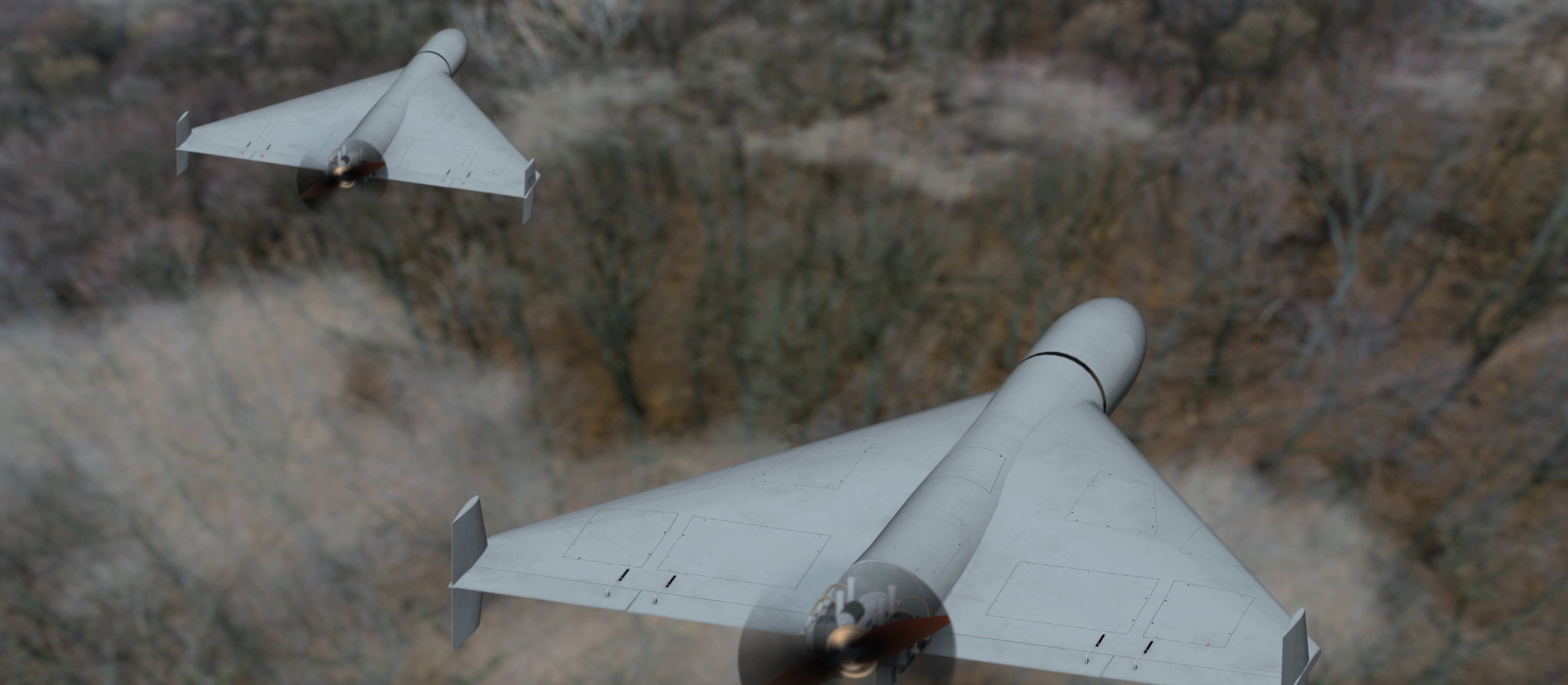
Ukraine has frequently innovated due to the fact that it had no alternative. We developed unmanned ground vehicles due to the fact that we lacked manpower and pioneered drone-based air defence due to the fact that we did not have adequate conventional surface-to-air rocket systems. Continuous Shahed attacks forced us to find cheaper and more scalable solutions. The same applies to medium-range strike drones.
That does not mean Russia has fallen behind everywhere. It retains crucial advantages in areas specified as glide bombs, which stay highly hard to counter.
Ukraine’s top advantage, however, is competition. Its defence manufacture consists of dozens, frequently hundreds, of companies competing in the same technological niches. Combined with fast battlefield feedback and close cooperation between the military and industry, that allows Ukraine to innovate faster than Russia in many areas.
In any fields Ukraine has closed the technological gap. In others, peculiarly drone-based air defence, it has moved ahead.
Ukraine has stepped up strikes on Russian fuel depots and refineries, while Russia has responded by attacking petrol stations across Ukraine. Soldiers told us the military relies on a separate fuel logistics system, meaning these attacks mostly affect civilians. Which side is actually more susceptible erstwhile it comes to disrupting military fuel supplies?
Russia can mostly only strike static infrastructure, whereas Ukraine increasingly targets not only depots but besides the vehicles transporting the fuel.
Russian attacks on petrol stations mainly affect civilians due to the fact that Ukraine’s armed forces trust on dedicated military logistics networks. Ukraine, by contrast, is increasingly disrupting Russia’s military fuel supply chain.
Let’s turn to the battlefield itself. We were late in Sloviansk, where the situation had noticeably deteriorated over the past fewer weeks. Is Russia getting closer to its aim of subjugating the Donbas region in its entirety?
Russia continues to make slow but steady gains. Conditions around Kostiantynivka have deteriorated, force close Lyman is increasing, and Russian forces are besides advancing east of Sloviansk and Kramatorsk following the failure of Siversk.
It is crucial to remember, however, that conditions vary considerably along the front. While Donetsk Oblast remains under pressure, Ukraine has had considerable success disrupting Russian logistics in the south. 1 reason is geography. In confederate Ukraine, Russia depends on a comparatively tiny number of roads, making logistics easier to disrupt. In Donetsk Oblast, it can trust on a much denser road and rail network, making interdiction considerably more difficult.
As a result, the situation is worsening there, although much more slow than Russia would like. The run remains 1 of grinding attrition alternatively than a return to manoeuvre warfare. The last major urban agglomeration under Ukrainian control in Donetsk Oblast now lies within scope of glide bombs, multiple-launch rocket systems and fibre-optic drones, making civilian life increasingly difficult.
Strategically, however, these gains do not bring Russia much closer to its political objectives. At the current pace, it would likely take well into next year to occupy the remaining Ukrainian-held parts of Donetsk Oblast. As long as Ukraine continues fighting and receives global support, incremental territorial gains alone will not win a war of attrition.
Continued western support is essential if Ukraine is to keep denying Russia victory. In the past weeks we’ve seen a fresh air-defence initiative in Europe, expanded defence cooperation and president Trump announcing future Patriot production in Ukraine. Has western support stabilized and can Ukraine trust on it?
I think we are now operating under a fresh model of support, first tested last year and since refined. Europe has become Ukraine’s chief backer, while the United States serves as an indispensable enabler, providing intelligence and respective critical niche capabilities. Today, the backbone of Ukraine’s defence is Ukrainian-produced technology financed by European money, supplemented by western weapons deliveries. The United States complements that strategy alternatively than leading it.
The model’s long-term viability depends mostly on European politics. Germany, together with the Nordic countries and the Netherlands, forms the core of military and financial support, while France and the United Kingdom play a leading diplomatic function through the Coalition of the Willing. Poland is besides strategically crucial due to the fact that it is the main logistical hub through which military aid reaches Ukraine.
Putin believes this coalition will yet weaken. He is betting that populist forces will gain ground across Europe and undermine support for Ukraine. That anticipation helps explain why he remains unwilling to end the war despite Russia’s increasing military and economical difficulties.
If Europe and Ukraine proceed cooperating effectively, expanding defence production and slowing Russia on the battlefield, I believe the United States will stay willing to supply key capabilities specified as intelligence and Patriot systems. There will never be adequate Patriot interceptors to satisfy global demand, but the decisive long-term relation is the 1 between Ukraine and Europe.
You mentioned Poland’s importance as a logistics hub. Taking the current political disputes between Warsaw and Kyiv into account, how do you measure Polish-Ukrainian military cooperation today?
Poland is no longer Ukraine’s largest military supporter. Most major weapons deliveries took place in 2022 and 2023.
The chief exception is Starlink. Poland continues to finance what are most likely tens of thousands of terminals that stay critical to Ukraine’s armed forces.
Beyond that, bilateral defence cooperation is comparatively limited. Unlike Germany or the Nordic countries, Poland has not launched major programmes to finance Ukrainian defence production or establish large industrial partnerships.
The next crucial test will be the EU’s SAFE defence financing mechanism. A key question is whether Ukrainian defence companies will be able to participate in Polish-led projects. That will depend partially on the broader political relation between the 2 countries.
For now, however, no major joint defence programmes are straight threatened by the current political tensions.
Many people argue that the tide of the war is turning in Ukraine’s favour. Even Ursula von der Leyen late made that claim. At the same time, erstwhile Commander-in-Chief Valerii Zaluzhnyi has warned against excessive optimism. What indicators should we actually be looking at erstwhile assessing the strategical balance of the war?
The most crucial improvement is that Ukraine has mostly found an answer to Russia’s current battlefield strategy.
Russia’s offensive model is no longer delivering the results it achieved in 2024 and 2025. Russian advances continue, but they no longer make the operational momentum or political impression of inevitable victory.
That leaves Putin with limited options. Russia can make fresh technologies or copy Ukrainian innovations, but that takes time. It can mobilize more troops, yet manpower alone no longer solves its fundamental military problem. Modern warfare increasingly depends on robotic systems and skilled operators alternatively than sheer numbers.
At the same time, we should avoid swinging from excessive pessimism to excessive optimism. Ukraine inactive faces serious constraints, peculiarly mobilization. Another hard winter lies ahead, and the country remains susceptible to attacks on its energy infrastructure.
Ukraine presently enjoys a window of chance due to the fact that Russia has not yet adapted to its innovations. But it besides faces a window of vulnerability. That is why it is inactive besides early to declare success.
What would success or triumph yet look like?
Success should not be measured by the number of fuel depots destroyed or the harm inflicted on Russia’s oil industry. Those achievements matter, but they are only instruments. The real measurement of success is simply a political settlement.
Ukraine has already shown considerable flexibility. It is prepared to negociate without insisting on the immediate recovery of all occupied territory, provided it is not forced to abandon its NATO ambitions, accept limits on its sovereignty or armed forces, or cede territory Russia has failed to conquer militarily.
The greater obstacle remains Putin. He continues to insist on maximalist demands despite increasing evidence that Russia’s military strategy is no longer producing decisive results. In many respects, he behaves like a gambler who never knows erstwhile to stop.
Ukraine should avoid making the same mistake. It must recognise the right minute for compromise while safeguarding its core national interests.
Everything else – the technological innovations, strikes deep inside Russia and improvements on the battlefield – is part of creating the conditions for that political outcome, not the result itself.
This interview has been edited for dimension and clarity.
Mykola Bielieskov has an MA in global Relations from the Taras Shevchenko National University of Kyiv. From 2016 to 2019 he worked at the Institute of planet Policy, a Ukrainian NGO. Since October 2019, he has worked at the National Institute for strategical Studies under the Ukrainian president (Department of Defence Policy). Since August 2022, he has besides worked for the Ukrainian charity Come Back Alive as a elder analyst.
Aleksander Palikot is simply a Kyiv-based reporter and correspondent covering politics, past and culture in Central and east Europe.
Jerzy Sobotta is simply a writer with German public broadcast Bayerischer Rundfunk. His coverage of the ongoing war in Ukraine has been published in Zeit and Welt, among others.
New east Europe is reader-supported. If you value independent coverage of Central and east Europe, delight consider supporting our work.
Click here to donate.



![Huti mają kilku sojuszników. Stąd wzięła się ich siła [WYJAŚNIAMY]](https://cdn.wiadomosci.onet.pl/1/_Qyk9lBaHR0cHM6Ly9vY2RuLmV1L3B1bHNjbXMvTURBXy83NjNlYzc4NmUyMWZlYjVlNDU0Y2E3ZWFkMTM4NzNjZi5qcGeSlQMczQQKzRN8zQr1kwXNCWDNBkDeAAKhMAehMQQ)