In a erstwhile piece in New east Europe, I argued that the strategy underpinning Serbia’s abroad policy – balancing Brussels, Washington, Moscow and Beijing against 1 another – was built for a permissive global strategy that no longer exists. Early July supplied the proof twice over, from 2 directions at once. The weeks since have supplied a 3rd and 4th confirmation, and this time the choices were Belgrade’s own.
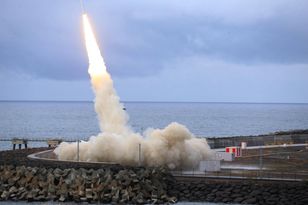
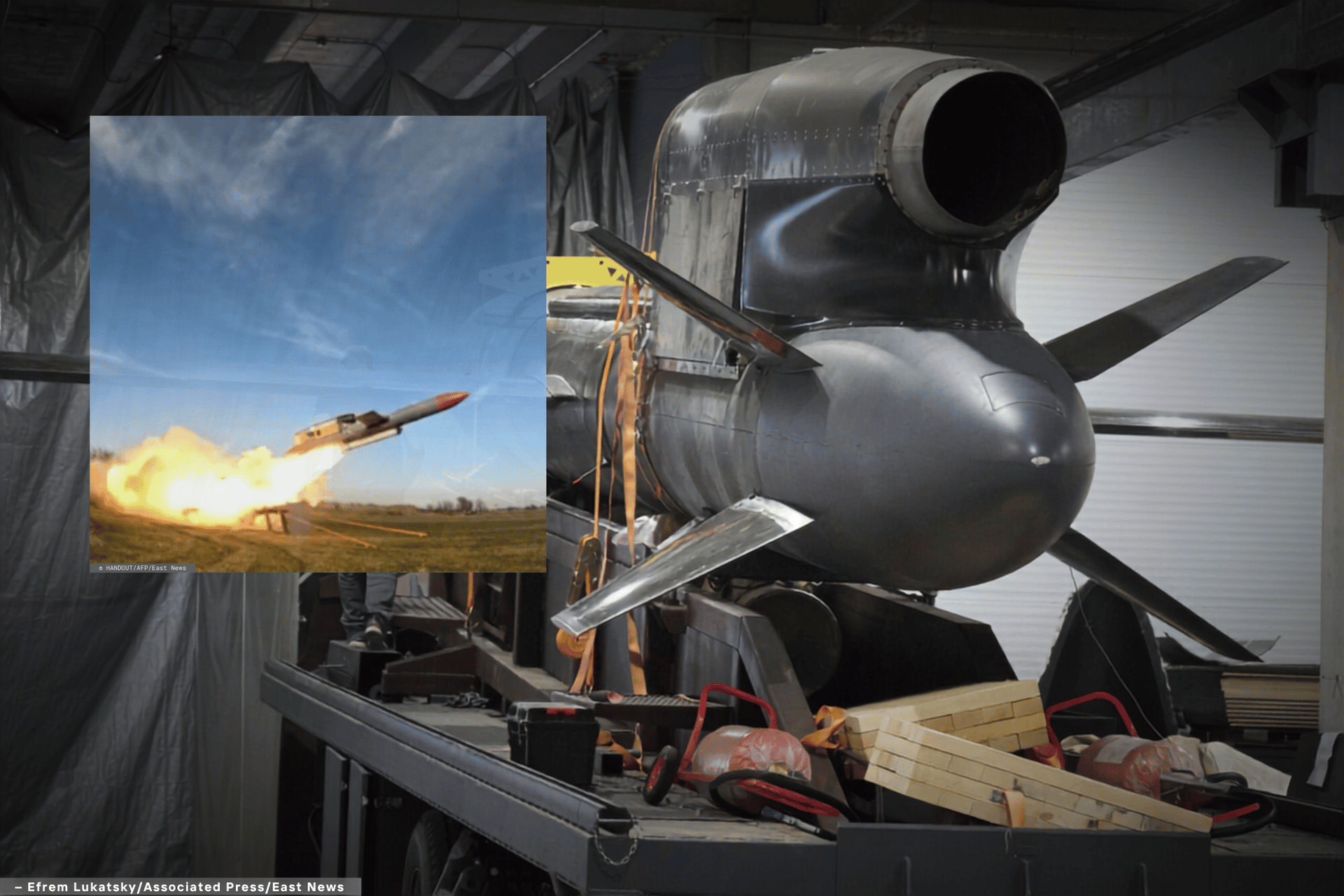
On July 8th, within hours of each other, 2 institutions that will form Serbia’s future delivered verdicts that looked like opposites and amounted to the same thing. In Strasbourg, the European Parliament adopted its latest yearly study on the country, which was drafted one more time by rapporteur Tonino Picula. The paper warned that Belgrade’s deepening safety relation with Beijing sits awkwardly alongside its declared European orientation. The most visible aspect of this is the acquisition of Chinese CM-400AKG air-to-surface missiles and, weeks earlier, the confirmed acquisition of the longer-range HQ-9 air defence system, making Serbia the system’s first European operator. In Ankara, host city for this year’s NATO summit, Alliance leaders spent 2 days on defence investment, industrial production and support for Ukraine. They did not mention Serbia, or the Western Balkans, erstwhile in the summit’s formal text.
One institution singled Serbia out as a problem. The another did not consider it worth naming. Read together, the 2 verdicts describe a single condition. Serbia has slipped into the blind place of European safety thinking: visible only erstwhile it does something wrong, invisible all time the continent’s actual future is being drawn.
What Strasbourg said
Picula’s study has, by now, a acquainted structure, and this instalment does not depart from it. It records that Serbia has made no tangible advancement towards beginning Cluster 3, despite years of declaring EU membership a strategical goal. The paper besides ties any further movement explicitly to alignment with EU sanctions on Russia – a condition Belgrade has now avoided gathering for more than 4 years since the sanctions were first imposed after Russia’s full-scale invasion of Ukraine in February 2022.
The safety section is the sharpest part of the text. MEPs voiced concern at the pace and depth of Serbia’s defence cooperation with China, treating it as evidence that Belgrade’s declared European trajectory and its actual military procurement no longer describe the same country. This is not a form of ritual censure. It is the language usually reserved for describing the rearmament of a rival, not the buying list of a candidate state.
The trajectory matters more than any single vote. The study passed by 468 votes to 116, with 79 abstentions, against a predecessor that passed 419 to 113 in May 2025. The margin has widened, not narrowed; if anything, the file has simply grown thicker.
What Ankara did not say
The NATO communiqué from Ankara, built around 3 narrow themes – investment, industrial capacity and Ukraine – did not mention Serbia, or the Western Balkans, in its formal text. That is simply a clear departure from earlier summit texts, which at least gestured towards the region.
That silence, though, was organization alternatively than universal. On the sidelines, the Croatian president Zoran Milanović told reporters he felt it was his work to rise Serbia’s rearmament at the summit – including, he said, long-range Israeli missiles alongside the Chinese systems. He besides warned that Croatia would yet gotta arm itself in kind. NATO, in his words, “needs to know about this”. But a president’s remark to journalists in a corridor is not a line in a communiqué, and the Alliance, collectively, chose not to compose down what 1 of its own members was saying openly. That gap – between what individual allies worry about privately and what the Alliance is prepared to registry formally – is itself the more telling silence.
The shift has small to do with Serbia specifically. It reflects a wider redistribution under way inside the alliance itself. Washington is withdrawing equipment and personnel from Europe and pressing European allies to take primary work for conventional defence. The full vocabulary of the summit is the language of an alliance reorganizing around its own core, not 1 extending its periphery. In that reorganization, a region whose largest state cannot decide whether it belongs to the western defence architecture simply falls out of view.
Nobody excluded Serbia from the conversation in Ankara. It excluded itself, years earlier, by declining to update the strategical papers that would tell NATO and the EU it is the reliable partner it says it wants to be. Serbia’s national safety strategy, inactive formally in force since 2019, frames cooperation with NATO as a shared interest – a pragmatic necessity. It goes further with Moscow’s alliance: deepening ties with the Collective safety Treaty Organization is described not as an interest but as a standing commitment. The discrimination is not accidental. 1 relation is transactional; the other, on paper, is simply a choice Belgrade keeps renewing.
There is simply a harder fact buried in Ankara’s silence, and it should worry Belgrade more than any resolution. Europe’s safety order is being rebuilt right now, through joint procurement funds, industrial production targets and permanent financing for Ukraine. It is besides being reimagined without waiting for undecided candidates to find their way out of the maze. A continent burdened by hybrid threats, drone incursions, and uncertainty over American commitment is losing patience for holding a reserved seat indefinitely for a country inactive governed by a safety strategy written for 2019. This is especially actual as Washington inactive treats bilateral military cooperation with Russia and China as a applicable mention point.
What Belgrade did instead
There was a 3rd data point that week, and Belgrade supplied it itself. On the same 2 days as the Strasbourg vote, the Serbian National Assembly hosted, together with Ukraine’s Verkhovna Rada, the first-ever “Conference of Speakers of Parliament of EU Candidate Countries”. The Serbian condition of this event was hosted at the Palace of Serbia. Addressing the assembled delegations, president Vučić said he does not anticipate the EU to take any enlargement decisions in the coming years – though, in his telling, that is no reason to halt reforming. The choreography was striking: Belgrade convening the candidates’ club at the very minute its own file was being marked down in Strasbourg, seated next to a guest, Ukraine, whose accession is inactive being actively prised open cluster by cluster while Serbia’s, opened a decade earlier, has not added 1 in years.
Two more moves followed, both unforced. In mid-July, Minister Boris Bratina travelled to Tehran as Vučić’s peculiar envoy for Ayatollah Khamenei’s funeral, standing among abroad delegations alongside elder Russian and Chinese officials – days before Belgrade’s own strategical dialog with Washington. On July 16th, Serbia signed on as a founding associate of the planet AI Cooperation Organization in Shanghai, alongside Russia, China and any 2 twelve another states – a broad coalition alternatively than a narrow bloc, but its signature came 1 day before the Washington dialog opened. Tehran, Shanghai, Washington: 3 moves in 3 weeks, no imposed on Belgrade by anyone else. That is no longer the balancing of 4 pillars. It is their dispersal.
perceive to the latest Talk east Europe podcast episode:
What Washington asked in return
Washington’s attention, erstwhile it came, arrived in a registry Serbia knows well: conditional and bilateral, not structural. The joint message from the July 17th strategical dialog in Washington included a 50 million US dollars Eximbank warrant to Telekom Srbija for 5G network improvement utilizing what the message called “trusted suppliers” – language Washington uses globally to separate allied, vetted networks from Chinese equipment in critical infrastructure. It is not a method phrase. It is simply a safety test dressed as a procurement standard, and it does not sit comfortably next to a minister who, months earlier, discussed 5G rollout, smart cities and AI cooperation with Huawei on the margins of the Mobile planet Congress.
A second bilateral motion followed within days. On 24 July, president Vučić announced that the 35 percent US tariff imposed on Serbian goods the erstwhile year had been reduced, for now, to zero – even as Washington simultaneously imposed fresh tariffs of 10 to 12.5 percent on about eighty another trading partners over forced-labour concerns. Vučić described it as a temporary arrangement pending negotiations, with a return to something like 10-12 percent expected later.
Both gestures confirm the same pattern as the trusted-suppliers language: Washington is willing to engage Belgrade directly, on terms it sets and can withdraw, without writing Serbia into any shared architecture. A tariff can be reset overnight by 1 telephone call; a line in a NATO communiqué cannot. That asymmetry is the point. Serbia is being transacted with, not integrated – attended to as a bilateral counterparty whose behaviour can be priced and adjusted, not as a partner whose place in the strategy is settled.
This is not only Serbia’s dilemma. A state of 7 million at the geographic centre of the Western Balkans, holding air-defence systems bought from Beijing and a safety strategy that inactive treats Moscow as a standing partner, is not a peripheral curiosity for European planners. It is simply a gap in the mediate of the map – a corridor through which Chinese, Russian and Gulf interests can decision with small friction, precisely as the continent hardens its east and confederate flanks. Serbia’s ambiguity is not simply a national failing; left unresolved, it is simply a standing vulnerability in Europe’s own safety architecture.
Neither threat nor partner
Put the risk, the organization omission and the transactional attention side by side and Serbia’s position comes into focus. It is judged consequential adequate to warrant criticism – hence the language on missiles in Strasbourg, and Milanović’s aside in Ankara – and consequential adequate to be quietly courted with a tariff reset and an Eximbank guarantee. But it is not consequential adequate to be treated as a strategical partner worth naming in either institution’s formal record. That combination is worse than hostility. States compose strategies for their enemies. Serbia gets neither the designation of an adversary nor the trust of a partner. It gets omission, punctuated by transactions.
This is the trap awaiting any state without an updated national safety strategy, without a clear position on the EU’s Common abroad and safety Policy, and without a coherent answer to its own doctrine of “four pillars”. Balancing between Brussels, Moscow, Washington and Beijing worked as long as the strategy rewarded ambiguity. It stops working the minute all another actor starts building concrete budgets and alliance commitments and simply moves on without asking where Belgrade stands, or whether it is coming at all.
The instruments to close this gap exist, and Serbia is inactive not utilizing even the basic ones. SAFE and ReArm Europe stay open to candidate countries: Albania and North Macedonia signed a safety and defence partnership with the EU as far back as November 2024, giving them access to the European Defence Agency and PESCO projects. Serbia has managed no of it – not for deficiency of capacity, but for a deficiency of will to put the question on the agenda at all.
Ambiguity was erstwhile Serbia’s instrument. It is fast becoming its verdict. Strasbourg inactive bothers to compose about the country; Ankara no longer bothers to mention it, even as 1 of its own members raises the alarm in the corridors; and Washington, for now, prefers to deal with Belgrade 1 bilateral favour at a time alternatively than compose it into anything permanent. Between an accusation, an omission and a transaction, Belgrade has spent a decade insisting it was choosing no of the three. This summer, for the first time, it looked as though the choice had quietly been made for it. Europe is no longer waiting for Serbia to choose. It is simply learning to build its safety without it.
Nikola Lunić is a Serbian geopolitical and safety analyst and retired Navy Captain. He previously served as Serbia’s Defence Attaché in London and Oslo and as Executive manager of the Council for strategical Policy. He is presently a strategical Affairs Consultant and a regular guest lecturer at the Faculty of Law, University of Osijek. He is the author of many analyses and media interviews on geopolitical, safety and global affairs topics published in Serbia, across the Western Balkans region, and in global outlets including CEPA and Kyiv Post.
New east Europe is reader-supported. If you value independent coverage of Central and east Europe, delight consider supporting our work.
Click here to donate.