
Trump’s abroad policy during his second word in office has so far been marked by destroying conventional alliances and entering into bizarre friendships. While the US president continues to express sympathy for Vladimir Putin, the very real consequences of this relation are seen on the ground in Ukraine.
For those who in 2022 were dismayed by Russia’s invasion of Ukraine and the subsequent relentless demolition of the country and its people, the shock of Trump’s open siding with Putin in early 2025 was comparable to the blow experienced at the start of the war. The betrayal was unexpected. For nearly 3 years, the US had helped Ukraine by providing arms and sharing intelligence. True, Biden’s support seemed limited and half-hearted – like another western leaders, he chose to exercise utmost caution erstwhile dealing with a state that possessed atomic weapons and threatened to usage them, but at least he had no uncertainty as to who was the aggressor.
As it shortly became clear, Trump’s vocabulary did not contain the word “aggressor”, nor, it seemed, was his head acquainted with the notions of “sovereignty”, “inviolability of borders” and others that formed the basis of the post-war global order. Rather, his language reflected his experience in property development, where “making a deal” was the eventual solution for everything. It is no wonder that the situation in the Donbas reminded him of “a complex real-estate deal times a thousand”.
A tale in slow motion
Three powerful chapters (three, 4 and nine) in Luke Harding’s Betrayal depict events acquainted to anybody who was following the planet news in 2025. They were extensively covered by the media and discussed by millions: the UN General Assembly voting on the war in Ukraine on February 24th (“L.10 Versus L.11”), Trump’s gathering with Zelenskyy in the Oval Office on February 28th (“Ambush”) and the summit in Anchorage on August 15th (“Make Kneeling large Again”). And yet, in Luke Harding’s book, they get fresh dimensions and, in retrospect, look even more crucial and sinister. Harding achieves this effect by presenting them as if in slow motion, detailing and clarifying all twist and turn of the proceedings and their immediate consequences.
To take just 1 example: erstwhile faced with the draft of the resolution proposed by the Ukrainians to the UN (it became known as L.10) in the run-up to the invasion’s 3rd anniversary, Trump’s administration suggested its own draft where references to Russian aggression and Ukraine’s territorial integrity had been removed. As Zelenskyy insisted on keeping the first and the Europeans supported him, the White home presented a rival resolution – L.11. American diplomats seemingly did not find it inappropriate to act behind the scenes, putting force on another states to make them uphold the American alternatively than the Ukrainian position. Still, 93 countries voted in favour of the Ukrainian resolution, 65 abstained and only 18 voted against it. Naturally, among those opposed were Russia, North Korea, Belarus, Cuba, Sudan and – shockingly – the US.
“The vote”, writes Harding, “was a pinch-yourself geopolitical moment. It marked a rupture in the transatlantic alliance, something which for eighty years had underpinned the ‘liberal global order’”. It was followed by Trump’s 90-minute phone-call with the Russian president, ending 3 years of Putin’s global isolation. Trump was most likely just as excited by “the incredible opportunities to partner with the Russians” as his Secretary of State Marco Rubio, who held negotiations with Russian abroad Minister Lavrov in Riyadh shortly before the UN vote. On the another hand, Zelenskyy, whose country had not been invited to take part in these negotiations and who politely enquired what had happened to the maxim “nothing about Ukraine without Ukraine”, was sternly told by Trump that Ukraine “should have ended the war 3 years [ago]. You should have never started it. You could have made a deal”.
Moscow must have been delighted – Trump was publically blaming the victim of its aggression, accusing Ukraine of not capitulating consecutive away. This was followed, about a week later, by an ugly scene of Trump and his officials trying to humiliate Zelenskyy in the Oval Office and actually evicting him from the White House. Encouraged by the unambiguous signals sent by the US, Russia reacted immediately: in the first 7 months after Trump’s inauguration, it doubled the number of its attacks on Ukrainian civilians. The death toll among civilians has been expanding always since.
One of the popular arguments initially put forward by Trump’s supporters was: “You truly don’t gotta perceive to what he says. This doesn’t matter. Look at what he does!” Harding’s scrupulous attention to what Trump said (and did!) in little than 2 years of his second word shows that the gap between the American president’s words and his actions has never been very large. He does not simply say it, he tries, whenever he can, to act accordingly. He is seemingly convinced that “might is right” and believes that as the most powerful man on Earth he is entitled to catch the territories he fancies – for example, Greenland, the recurring dream of which, as Harding persuasively shows, has never left him.
Why Russia?
Trump’s indifference to Ukraine’s suffering, his sympathy for Putin seen during the summit in Anchorage (“I’ve always had a fantastic relation with president Putin, with Vladimir”), his postponing deadlines for introducing sanctions against Russia, and helping Russia by refusing to aid Ukraine, has made many minds wonder: why? What is behind Trump’s preferential treatment of Russia?
Luke Harding names respective theories. 1 is based on what he calls “ideological convergence”, that is, “Putin positioning himself as a champion of conservative thinking” that is peculiarly appealing to the American far right. authoritative Russian propaganda extols the nation’s alleged devotion to conventional Christian values, presumably upheld by the changes in Russian law introduced under Putin: criminalising the “promotion” of same-sex relationships and decriminalizing home violence. Another explanation explains Trump’s support for Putin by his envious admiration for his Russian counterpart’s unlimited power – omnipotent as he thinks he is, Trump cannot (yet?) dream of simply jailing and murdering his critics. Another strong motive might be Trump’s want to reverse everything done by his predecessor: if Biden had condemned Russia’s invasion and supplied Ukraine with weapons, Trump blamed Ukraine and cut American military assistance to it. Now the US sells weapons to Europeans who then send them to Ukraine.
There is yet another explanation which occurs not only to those who are obsessed with conspiracy theories: is Trump a Russian asset? Can Putin blackmail him? Harding tells a communicative of KGB interest in Trump that started 50 years ago and continued after the collapse of the russian Union, which is of course vehemently denied by the US president. The dossier prepared by the erstwhile MI6 officer Christopher Steele in 2017 did not seem convincing adequate and mostly was not believed. For the time being – and most likely for any years ahead – no definitive answer to the provocative questions is likely to be found. But Harding ends these reflections with a question, which makes the puzzle nearly irrelevant: “if Trump were a Russian agent, what precisely would he do differently?”
This brings discussion to the position of European countries. In the chapter called “Sabotage”, Harding makes it clear that despite European leaders’ almost unanimous show of support for Zelenskyy, their high-minded rhetoric and even their gradual knowing that the US will not aid if Europe is attacked, they inactive are reluctant to admit that Russia has for any time been waging a war against Europe. It employed dozens of methods – from infringing Europe’s airspace to the weaponization of migration, from disinformation to targeting its critical infrastructure – and it is inactive doing it, investigating whether European states are capable of resistance. At the moment, unfortunately, they do not seem to be, and it is not only due to the deficiency of money for defence but rather, as Harding suggests, the deficiency of political will, which could have helped focus efforts on assisting Ukraine to defeat the Russian army.
A Pyongyang connection
On top of all the astute political analysis, Betrayal is full of people’s voices. As elder global correspondent for the Guardian, Luke Harding started reporting from Ukraine a couple of months ahead of the war, in December 2021. He was in the country erstwhile the full-scale invasion started and for the next 4 and a half years has been going to the war region regularly, at considerable hazard to his own life. Apart from interviewing major politicians, he had many conversations with average people whom he met at the frontline, at the cemeteries with fresh graves, close the fields with natural resources, in tiny villages, in provincial towns and in large cities, like Odesa, Kharkiv and Kyiv.
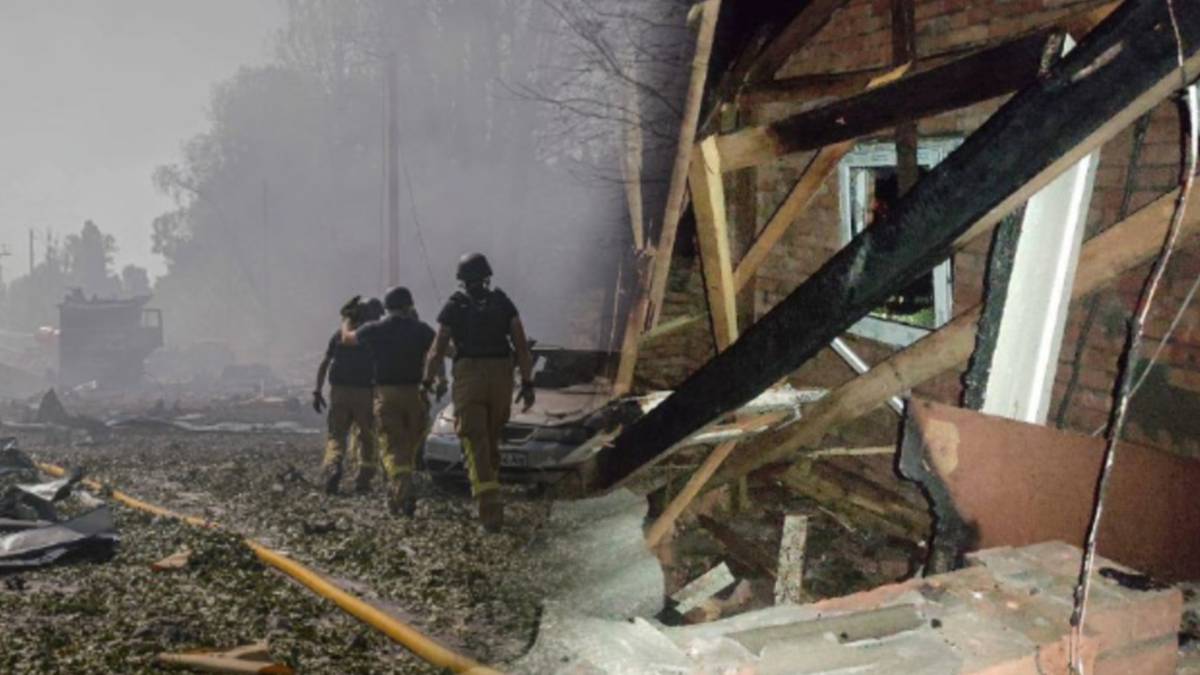
In the centre of Kharkiv he was shown a late bombed apartment, where a husband and wife, both 83, had lived for 20 years. It was covered with the wife’s blood – Halina, who had been working on the fourth-floor balcony, was wounded by the debris from an detonation erstwhile a rocket landed in their yard. Her husband Yuri found a remnant of the rocket in their surviving room. It was made in the Democratic People’s Republic of Korea (DPRK). At that point, Russia denied a Pyongyang connection, but American intelligence confirmed that the strike on December 30th 2023, erstwhile Yuri and Halina’s flat was hit, was the first time a North Korean short-range ballistic rocket had been fired. And it was not the last.
After Putin’s visit to North Korea in June 2024, the cooperation between Russia and the DPRK became authoritative and in October of the same year, 14,000 badly trained North Korean troops were sent to Russia’s Kursk region to fight Ukrainians, who had seized a chunk of it in August 2024. Among Harding’s biggest journalistic scoops in this book are chapters based on his conversations with 2 North Korean soldiers, who had been wounded on the battlefield and became Ukrainian POWs. The chapters uncover the terrible inhumanity of the totalitarian state, which sends its unprepared troops to fight in a abroad country for a origin they know nothing about and expects them to commit suicide alternatively than be captured. Both cellmates – aged 26 and 21 – had tried to take their own lives but failed. The deplorable depths of their indoctrination are besides exposed. The drawings the older of the prisoners made from memory in his sketch book included a image of Kim Jong Un, together with his full title “Supreme Leader of our Party, State and Armed Forces, First Secretary of the Workers’ organization of Korea, etc, etc.”, as well as portraits of another Korean leaders and of Stalin, Putin and Hitler…
Luke Harding’s book seems to increase in relevance with all day that passes. Soon, further to the agreement between Russia and North Korea, 50,000 North Korean soldiers are going to be sent to kill Ukrainians. Meanwhile, president Trump has just ordered the shortening of the yearly American-South Korean military drills, partially due to his “very good relationship” with Kim Jong Un. “I get along with him very well,” he said, “I am making things safer.”
Betrayal: Trump, Putin and The fresh Age of Conquest by Luke Harding. Guardian Faber Publishing 2026.
Masha Karp is simply a political journalist, a literary critic and a student of the work of George Orwell. She is the author of 2 books about Orwell: his biography in Russian (St Petersburg: Vita Nova, 2017) and George Orwell and Russia, in English (London: Bloomsbury 2023).
New east Europe is reader-supported. If you value independent coverage of Central and east Europe, delight consider supporting our work.
Click here to donate.

![Tusk ostrzega przed Rosją i tragiczny atak w Ukrainie [SKRÓT DNIA]](https://i.wpimg.pl/1920x/filerepo.grupawp.pl/api/v1/display/embed/042665cc-becc-48ba-ac4a-c2a59196fd55)


![Po pięciu latach sprawowania władzy talibowie mają Rosję w garści. Teraz patrzą na USA [ANALIZA]](https://cdn.wiadomosci.onet.pl/1/PyWk9l0aHR0cHM6Ly9vY2RuLmV1L3B1bHNjbXMtdHJhbnNmb3Jtcy8xL3psYWt0a3BUVVJCWHk4M05qUTBZemM0TlRZek5qRmpaR0ptTURnME5XTTBOakkxTXpBeFpqYzJPUzVxY0dlUmxRTUF6UUU3elJlZ3pRMUuRkwXNCWDNBkDeAAKhMAehMQQ)