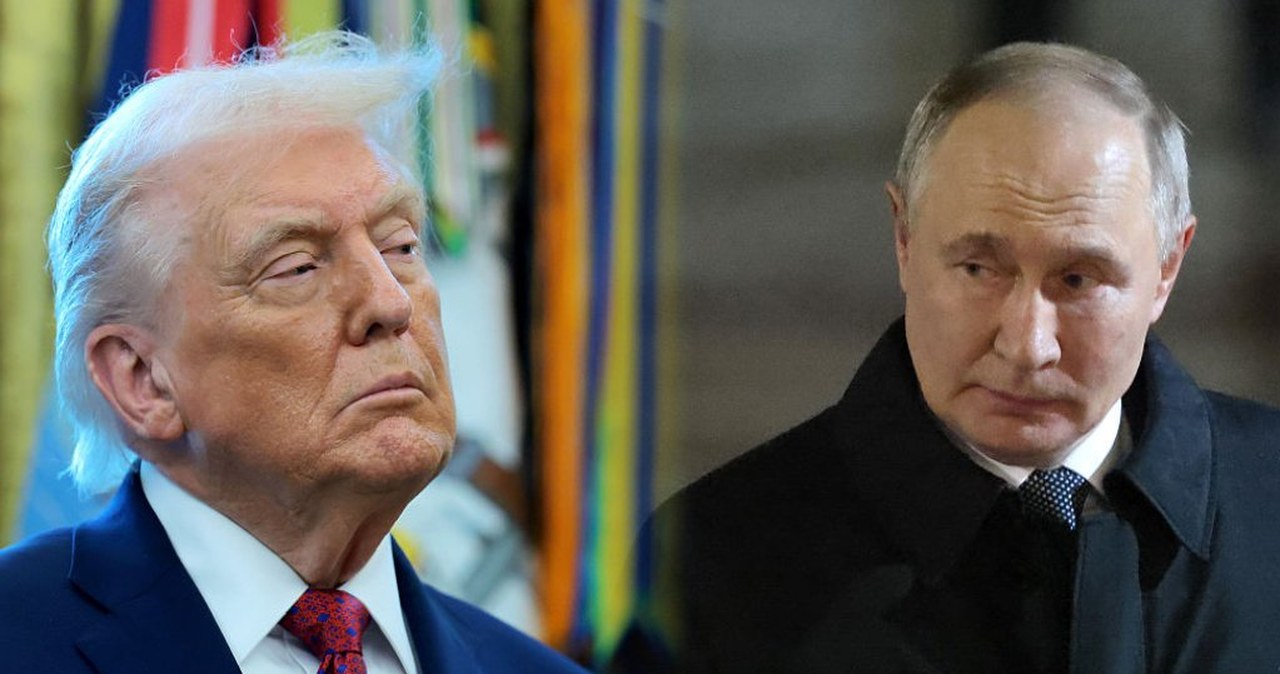
Among United States president Donald Trump’s more fanciful ideas is the notion that he is any kind of a peacemaker. The actions of the self-labeled “President of Peace” over the past fewer days read more like a farce than they do a serious statesman. Consider:
- On December 3rd, he christened a Washington building the “Donald Trump Institute of Peace”. It was the erstwhile location of a government-chartered, independently operated think tank known as the United States Institute of Peace. In March the Trump administration had locked out the actual abroad policy (and peace) experts who worked there. “Congratulations, world!” said his spokesperson this week, as if this grotesque act of self-aggrandizement could be projected as a favour bestowed on the global community.
- On December 4th, Trump utilized that space to stage a signing ceremony between the Democratic Republic of Congo and Rwanda, ostensibly ending the conflict that has raged on and off in east DRC since 1999. The proxy militias back in Congo who are actually waging the war may or may not have taken notice: they appear to be besides busy fighting 1 another in the region of South Kivu.
- Finally, on December 5th, FIFA president Gianni Infantino awarded Mr. Trump FIFA’s recently created “FIFA Peace Prize” – a measurement of consolation for the US president who was seemingly stunned to wake up 1 Friday morning this past October to find that he had not been awarded the Nobel Peace Prize.
Like any good farce, however, the comedic elements mask a deeper tragedy. These events took place while a debate raged over whether the (criminal) responsibility for ordering the on-camera execution of 2 Venezuelan sailors whose boat had been destroyed by an American fighter jet lay with the Navy Admiral in charge of the mission, the Secretary of “War” Peter Hegseth, or the president itself. At the same time, there was besides a Cabinet meeting on Tuesday in which he had engaged in a diatribe against Somalians (and Somali Americans) that counts as hatred speech by almost any definition.
The tragedy of Trump’s peace posturing is that they tend to have small to do with peace. As Kathryn Hemmer and I noted amid Trump’s Nobel lobbying campaign, Trump’s deals are fundamentally transactional, frequently centred on investment pledges conditioned on preferred access for American companies. In the words of the Switzerland-based scholars Sara Hellmüller and Bilal Salaymeh, the approach “focuses on short-term deals alternatively of long-term outcomes”. It systematically neglects the pursuit of accountability for violations of global human rights law, to say nothing of the underlying causes of conflict.
All of this is on display, at its worst, in Trump’s “28-point Peace Plan” to end Russia’s war against Ukraine. At its core, the plan effectively dictates Ukrainian surrender on Russian terms, ceding to Russian control parts of the country it invaded that it does not occupy – a rejection of the principles of sovereignty and non-aggression that have served as the foundation of the post-war era. Meanwhile, it besides lays out the basis for dividing the spoils of war – and, including reconstruction contracts, those of peace as well – between American, Russian, and possibly any Ukrainian investors.
Overall, the plan is long (if inactive vague) on safety matters and reconstruction financing issues, but short and imbalanced on issues of human rights.
Trump’s plan barely mentions the thousands of Ukrainian children that have been abducted from Russian-controlled Ukraine and brought into Russia proper. Yale’s Humanitarian investigation Lab estimates that there are as many as 36,000 Ukrainian children in Russian custody. Work by the Reckoning Project (an global NGO on whose board I service as chair) illustrates in harrowing detail how Russia took – and sometimes tortured – prisoners of war in Ukraine, all while sending their children to re-education camps in Russia.
The plan is besides silent on the rights of minorities in areas it allows Russia to annex, even as it prescribes circumstantial rules and protections for minorities – presumptively referring to Russians – in areas under Ukrainian control. The asymmetry is peculiarly galling in light of the repeated insistence by Russian officials that challenges the right of Ukrainians to embrace their own identity within their own country. On the eve of the full-scale invasion in 2022, Russian president Vladimir Putin declared that “there was no historical basis” for “the thought of Ukrainian people as separate from Russians”. Late last month, Putin signed a decree mandating “strengthening all-Russian civic identity” in Russia-occupied Ukraine through various language, educational and cultural policies.
Trump’s plan calls for “full amnesty” for “all parties active in this conflict”. The war began with a flagrant violation – by Russia, against Ukraine – of the global norm of non-aggression. It has been waged on Ukrainian soil, with Ukrainian citizens subjected to massive aerial demolition of residences, social and physical infrastructure, and the environment. Throughout this war, which was never of the Ukrainians’ choosing, Russian military doctrine has subjected Ukrainians to myriad violations of global law, including war crimes and crimes against humanity.
The global Criminal Court has recognized as much, issuing warrants for the arrest of Putin and the Russian commissioner of children’s rights, Maria Lvova-Belova, for their function in the deportation and transfer of Ukrainian children. It should not go unnoticed that the acts of which they are accused could be deemed to violate the United Nations Genocide Convention as well. Clause 2(e) of the Convention states that an act of genocide is committed if “Forcibly transferring children of the group to another group” with the intent to destruct the protected group “in full or in part”. Taken in conjunction with the stated Russian efforts to erase Ukrainian identity, Russia’s kid transfers can be seen not just as sinister, but outright genocidal.
In this light, the “full amnesty” clause of the Trump plan amounts to the appeasement of genocide. No nation should support a plan that advances that cause. To be clear, peace in Ukraine is simply a desirable end. Negotiators should by all means search to attain it. But it cannot come at the expense of rewarding those who have flagrantly violated global law and norms. This cannot be another farcical peace ploy that trumpets investment propositions and one-sided safety bargains, all while kicking human rights to the curb.
David J. Simon is the manager of the Genocide Studies Program and Assistant Dean of the Jackson School of Global Affairs at Yale University. He is besides the Board Chair of The Reckoning Project.
New east Europe is simply a reader supported publication. delight support us and aid us scope our goal of $10,000! We are nearly there. Donate by clicking on the button below.